Choosing the Right Cloth for Made-to-Measure Business Wear and Womenswear Capsule Wardrobes UK

A beautifully cut jacket can lose its impact if the cloth is wrong. Too light, and it may wrinkle before lunch. Too heavy, and it feels uncomfortable in a heated room. Too shiny, and it can look evening-led rather than boardroom-ready. The right cloth is the quiet foundation of made-to-measure business wear and womenswear capsule collections made-to-measure in UK .
At Lulu Stripe Bespoke tailoring, expert in made-to-measure womenswear, cloth is not chosen from a narrow rail of predictable options. The tailor works with bunches of fabrics for all seasons, climates, and occasions, from crisp suiting wool for daily wear to softer flannels, textured linens, elegant twills, and refined blends for pieces that need to work hard without looking strained.
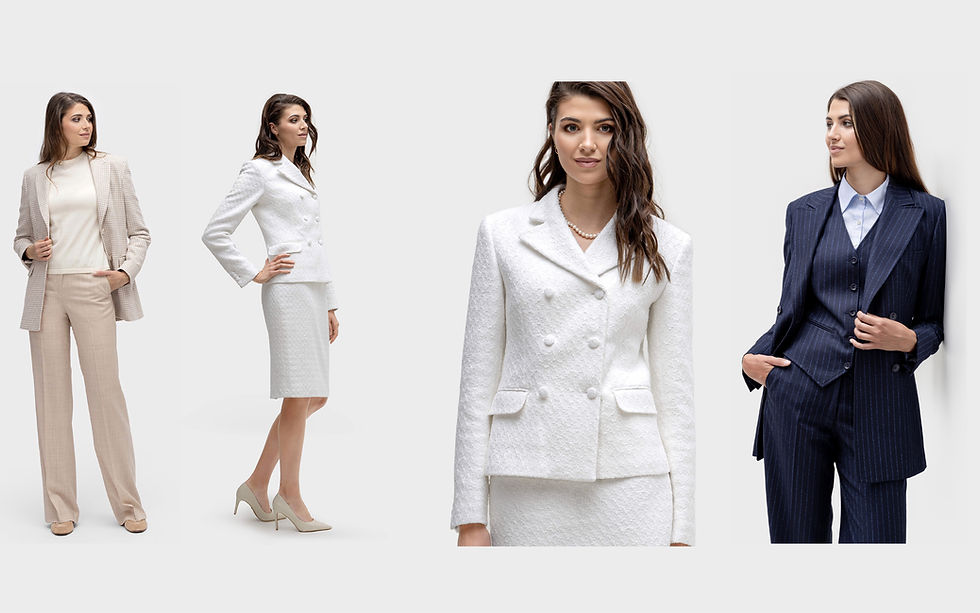
For made to measure womenswear Business wear, cloth choice becomes even more personal. A capsule wardrobe is created with the client, not simply for them. It takes into account role, lifestyle, travel, preferred silhouettes, colour palette, body shape, and the settings where each garment needs to perform. The result is business wear that feels considered, comfortable, and distinctly individual.

Why cloth choice matters in made-to-measure women’s business capsule wardrobe designed in Windsor, UK
Business wear has to do more than look smart in a mirror. It must support movement, hold its shape, suit the season, and sit comfortably through long days. Cloth affects all of that.
A garment’s cloth determines:
Drape
How the garment falls from the shoulder, waist, or hip.
Structure
How much shape it can hold in a jacket, trouser, skirt, or dress.
Comfort
How it feels against the body and how well it works with heat, cold, and movement.
Recovery
How well it resists creasing after sitting, travelling, or wearing all day.
Visual tone
Whether the piece feels formal, relaxed, creative, conservative, understated, or polished.
A smooth navy fabric communicates something different from a softly brushed charcoal flannel. A fine wool crepe has a different presence from a linen blend. A high-twist wool trouser behaves differently from a soft wool cashmere blend.
This is why a tailor’s fabric bunches are so valuable. They allow cloth to be compared by hand, not just by colour. The client can see how a fabric bends, how it catches light, and whether it feels crisp, soft, fluid, or structured.
Start to plan your made-to-measure womenswear capsule wardrobe with the purpose of the garment
Before looking at colour or pattern, start with the job the garment needs to do. A tailored made-to-measure capsule wardrobe works best when each piece has a clear role.
A jacket worn several times a week needs a cloth with resilience. It should hold its shape, resist creasing, and pair easily with other pieces. A dress for important client-facing occasions may need more body, so it feels composed and sits cleanly. A trouser for regular travel needs comfort, recovery, and a fabric that does not look tired after a journey.
For a made to measure womenswear capsule wardrobe designed in Windsor UK purpose usually falls into a few helpful categories.
Daily business pieces
These are the garments that need to earn their place. They may include a navy jacket, charcoal trousers, a tailored skirt, a shift dress, or a soft structured blazer. Cloth for these pieces should be dependable, wearable, and easy to combine.
Good choices include:
Fine worsted wool
High-twist wool
Wool stretch blends with good recovery
Wool crepe
Mid-weight twill
These fabrics tend to work well because they balance polish with practicality. They are smart without being fragile.
Statement pieces
A made to measure capsule wardrobe does not need to be plain. One distinctive jacket, dress, or trouser can add personality while still feeling professional. This might be a subtle check, a textured weave, a rich seasonal colour, or a cloth with a more pronounced finish.
The key is restraint. A statement business piece should still sit comfortably alongside the rest of the wardrobe. It should add interest without becoming difficult to wear.
Occasion-led pieces
Some garments are created for moments when extra polish is needed. This could include a tailored dress for speaking engagements, a refined jacket for events, or a beautifully cut coat for arriving with presence.
Here, cloth can feel more elevated. A wool silk blend, fine crepe, or cloth with a gentle lustre may work well, depending on the cut and occasion.
Choose cloth by season, not just colour
Colour often attracts attention first, but season matters just as much. A cloth that looks perfect in January may feel too warm in June. A summer fabric may lack the body needed for colder months.
A versatile made to measure womenswear capsule wardrobe usually has a balance of weights and textures.

Spring and summer cloth
Warmer months call for cloth that feels lighter and breathes well. This does not mean the garment has to crease easily or lose structure.
Strong options include:
Lightweight worsted wool
High-twist wool
Wool linen blends
Cotton blends
Fine crepe
Lightweight hopsack
High-twist wool is especially useful for warm weather business wear because it tends to resist creasing and has a dry handle. It can look sharp while feeling cooler than heavier cloths.
Linen and linen blends have charm and texture, but pure linen creases as part of its nature. For a sharper business look, a blend may be more practical.
Autumn and winter cloth
Cooler seasons allow for richer textures and more substantial fabrics. These can add depth to a capsule wardrobe without relying on bold colours or strong patterns.
Useful options include:
Worsted wool in medium weights
Flannel
Cavalry twill
Barathea
Wool cashmere blends
Fine tweed
Flannel can be particularly elegant for womenswear. It has softness, warmth, and a quieter finish than many flat weaves. It works beautifully for trousers, skirts, dresses, and jackets when the cut is clean.
Tweed and textured cloth can be excellent for jackets and coats, but they need careful selection. Too rustic, and the piece may feel less business-focused. The right fine tweed can add authority and individuality.
Understand weight, weave, and drape
Cloth is often described by weight, but weight alone does not tell the full story. Two fabrics can weigh the same and behave very differently.
Weight affects warmth and substance. A heavier cloth often hangs well and resists small wrinkles, but it may feel too warm for indoor working days or travel.
Weave affects texture, durability, and formality. Twill has a diagonal structure and often drapes well. Plain weave can look crisp. Hopsack has an open texture that works well for jackets. Crepe has a distinctive texture and often suits womenswear beautifully.
Drape affects the silhouette. A fluid cloth may be elegant in wide-leg trousers or a softly shaped dress. A firmer cloth may be better for a structured jacket or pencil skirt.
This is where skilled tailoring matters. Lulu Stripe Bespoke can guide the client through the behaviour of each cloth, explaining which fabrics will suit a particular cut. A soft cloth may not support a sharp shoulder. A crisp cloth may not suit a flowing, unstructured garment. The most successful pieces bring fabric and cut into agreement.
Build a capsule wardrobe with intention
A womenswear capsule wardrobe is not a set of matching garments bought in one colour. It is a small, considered group of pieces that combine easily and suit real life.
In made to measure tailoring, the process starts with the client’s needs. The tailor will usually explore how the wardrobe is worn across the week, what pieces are missing, which colours feel natural, and what level of formality is required.
A business capsule might include:
One beautifully cut jacket in navy, charcoal, or another versatile shade
One pair of tailored trousers
One tailored skirt, if it suits the client’s style
One dress that can stand alone or sit under a jacket
One softer jacket or separate for less formal days
One coat or outer layer for colder months
The value lies in how these pieces connect. A navy jacket might work with charcoal trousers, a soft grey dress, and a patterned skirt. A camel or deep green jacket might soften a neutral wardrobe without feeling loud. A fine check may add interest while still pairing with plain separates.
Made to measure also allows the capsule to respect proportion. Jacket length, waist placement, trouser width, skirt shape, sleeve line, and neckline all affect how the wardrobe works. When these details are right, the clothes look coherent rather than simply coordinated.

Use colour and pattern with care
Business wear does not need to be limited to black, navy, and grey. Those colours are useful, but a strong capsule can include softer neutrals, deep jewel tones, muted checks, fine stripes, and textured weaves.
The best colour choices support the wearer rather than dominate them. Some clients look strongest in cool charcoal, ink, and blue-based tones. Others come alive in warmer camel, olive, chocolate, ivory, or soft taupe.
Pattern needs the same care. A fine stripe can lengthen the silhouette and feel elegant. A subtle check can add personality. A textured plain may offer the best of both worlds, giving depth without looking patterned from a distance.
For business wear, consider how a cloth reads at three distances:
Close up, where texture and quality are visible
Across a room, where colour and silhouette matter most
In motion, where drape, fit, and posture become clear
A cloth should hold its own in all three.
Fit changes how cloth is perceived
Even the finest cloth cannot compensate for poor fit. When a garment pulls, gapes, twists, rides up, or collapses in the wrong place, attention moves away from the person wearing it and towards the problem.
Well fitting garments do the opposite. They create ease. They allow the wearer to sit, stand, walk, and gesture without constant adjustment. They make the body look balanced rather than restricted.
In business settings, fit can also change how authority and expertise are perceived. Clothing is never the whole story, but it is part of the first impression. A jacket that sits cleanly on the shoulder, trousers that fall smoothly, or a dress that skims without pulling can suggest composure and care.
That sense of being well prepared can affect the wearer too. When clothes fit well, confidence often rises because the outfit is not a distraction. The person can focus on the room, the conversation, and the work at hand.
This is one of the strongest reasons to choose bespoke or made to measure tailoring. The process allows for individual posture, proportions, preferences, and movement. It creates garments that feel natural on the body, not borrowed from a standard block.
Think about maintenance before committing
Practicality should be part of the cloth conversation. A fabric may be beautiful, but if it needs constant pressing or specialist care after every wear, it may not suit a busy business wardrobe.
Questions to ask include:
Will this cloth crease easily?
Does it recover well after sitting?
Is it suited to travel?
How often will it need pressing?
Is it best for dry cleaning only?
Will the colour work across several seasons?
Can it be worn with existing shoes, coats, and accessories?
A capsule wardrobe should reduce friction, not add to it. The best cloth choices look refined and continue to perform after repeated wear.
What to expect when choosing cloth with Lulu Stripe Bespoke
Choosing cloth with a tailor should feel guided, not overwhelming. Fabric bunches can contain hundreds of options, but a good consultation narrows the field in a practical way.
The process may include discussing:
The client’s working life and regular occasions
Climate, travel, and seasonal needs
Preferred colours and textures
Body shape and garment silhouettes
Existing wardrobe gaps
The level of formality required
How each piece will combine with others
From there, cloth can be selected with the garment in mind. A jacket cloth is chosen for structure and versatility. A trouser cloth is chosen for drape and recovery. A dress cloth is chosen for comfort, shape, and movement. The wardrobe becomes a set of connected decisions rather than isolated purchases.

A well chosen cloth works quietly
The right cloth does not shout for attention. It supports the cut, suits the season, and helps the wearer feel at ease. It looks appropriate in the room, holds its shape during the day, and continues to earn its place in the wardrobe.
For tailored business wear, that quiet reliability matters. For a made to measure womenswear capsule wardrobe, it matters even more. Each piece needs to work alone, combine with others, and reflect the person wearing it.
Lulu Stripe Bespoke tailoring brings the cloth, cut, and client together. With the right guidance, fabric bunches become less of a maze and more of a map. The result is a wardrobe built with purpose, shaped around real life, and finished with the confidence that only well fitting garments can give.


Comments